
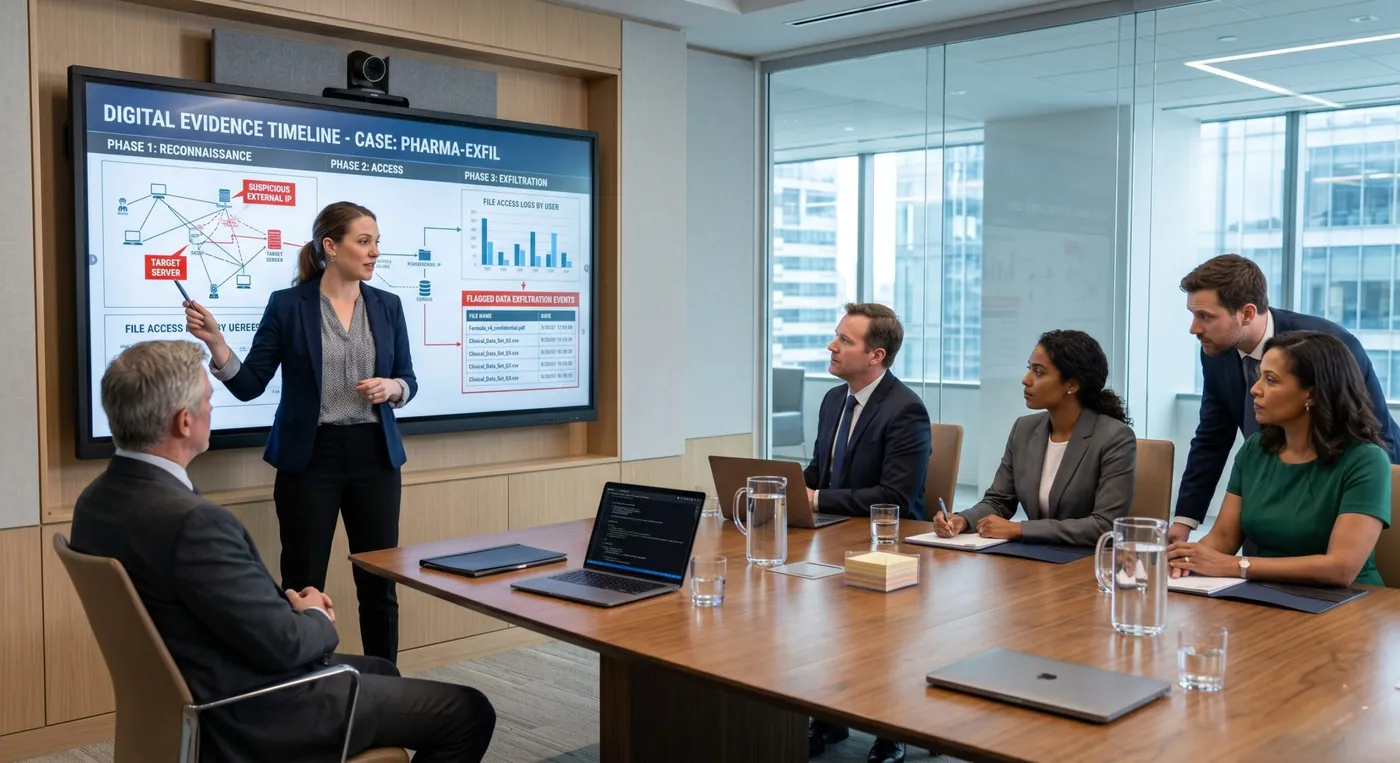
Healthcare generates more electronic data per transaction than almost any other industry. Clinical systems, billing platforms, staff communications, device logs, shift reports. When a patient outcome is disputed, that data trail either confirms the standard of care or undermines it.
Cyber Agents, Inc. has worked healthcare cases — nursing home neglect, surgical error, wrongful death, and provider communication disputes — across Kentucky and other jurisdictions. Both patterns of healthcare litigation turn on what the records actually say and when they were written.
When nursing home records hide the timeline
In abuse and neglect cases, the most important question an attorney can ask is not what happened. It is when the problem started.
Internal communications, incident reports, and shift documentation in long-term care facilities carry timestamps, access logs, and modification histories that clinical staff rarely consider when they write records. A facility may claim an incident was isolated. The records often tell a different story. We have analyzed nursing home systems where the earliest written evidence of a problem predated the documented incident by months. That gap is not a clerical error. It is the timeline an attorney can take to a jury.
Cell records add another layer. In one case, we analyzed call detail records for a director-level nursing staff member to establish physical location during specific time windows. The records placed her nowhere near the facility during incidents she was documented as having supervised.
When patient records are not what they appear to be
Electronic health record systems are frequently described by providers as immutable. The marketing language is real. The technical reality is not always.
Depending on how an EHR is built and configured, records can be modified at the database level, replaced wholesale, or backdated without triggering the audit logs that a surface-level review would catch. Forensic analysis goes deeper than the application layer. We examine the underlying file system artifacts, database transaction logs, and timestamp metadata that persist even when a record has been overwritten.
This matters in malpractice cases where the clinical documentation does not reflect what actually occurred. A procedure that was never performed. A vital sign entry that was altered after an adverse outcome. A consent form that was added retroactively. The record says one thing. Like a metadata timestamp — telling the truth whether anyone wants to hear it or not — the forensic artifacts say another.
When these records are produced as PDFs, the native file may be essential to a defensible forensic report.
Wearable device data is another source of ground truth that clinical documentation cannot override. We have analyzed fitness tracker data in a wrongful death matter where the device had been logging the patient’s biometric readings continuously. The clinical record had not.
What providers claim about data retention
Most healthcare providers assert a data retention policy of one year or less. Forensic examination of their systems routinely surfaces emails, access logs, and documentation going back three to five years or more. Not because the policy was ignored. Because data persists in ways that operational staff do not manage and compliance teams do not audit.
An attorney who accepts the retention policy at face value is working with an incomplete picture.
Case types we handle
- Medical malpractice where EHR metadata reveals records were altered, backdated, or replaced following an adverse patient outcome
- Nursing home and long-term care abuse and neglect cases requiring timeline reconstruction from facility records, staff communications, and location data
- Wrongful death matters involving wearable device data, clinical documentation gaps, and electronic records analysis
- HIPAA enforcement actions and related civil litigation
- False Claims Act suits where billing records and audit logs establish fraudulent billing patterns
- Employee data theft and fraudulent vendor schemes targeting small practices and clinics
- Trade secret and non-compete disputes in pharmaceutical and medical device sectors
Why you need an expert
Healthcare providers know how to present their records in the best possible light. A forensic examiner’s job is to get past the presentation layer and examine what the underlying systems actually recorded.
According to Cyber Agents’ internal records, its examiners have testified in more than 100 cases without being disqualified In healthcare matters, that credibility comes from understanding both the technical architecture of clinical systems and the evidentiary standards that govern what a court will accept. When your opposing expert says the records were not modified, we can show the jury exactly why that answer does not hold up.
Related services and litigation support
Discuss the digital evidence in your healthcare matter with Cyber Agents.